


EXPERIENCE MATTERS MOST WHEN THE ANSWER ISN’T OBVIOUS.
Experience is not a finishing point; it is the foundation from which I continue to learn, refine and improve the way I practise — with better patient care as the purpose.
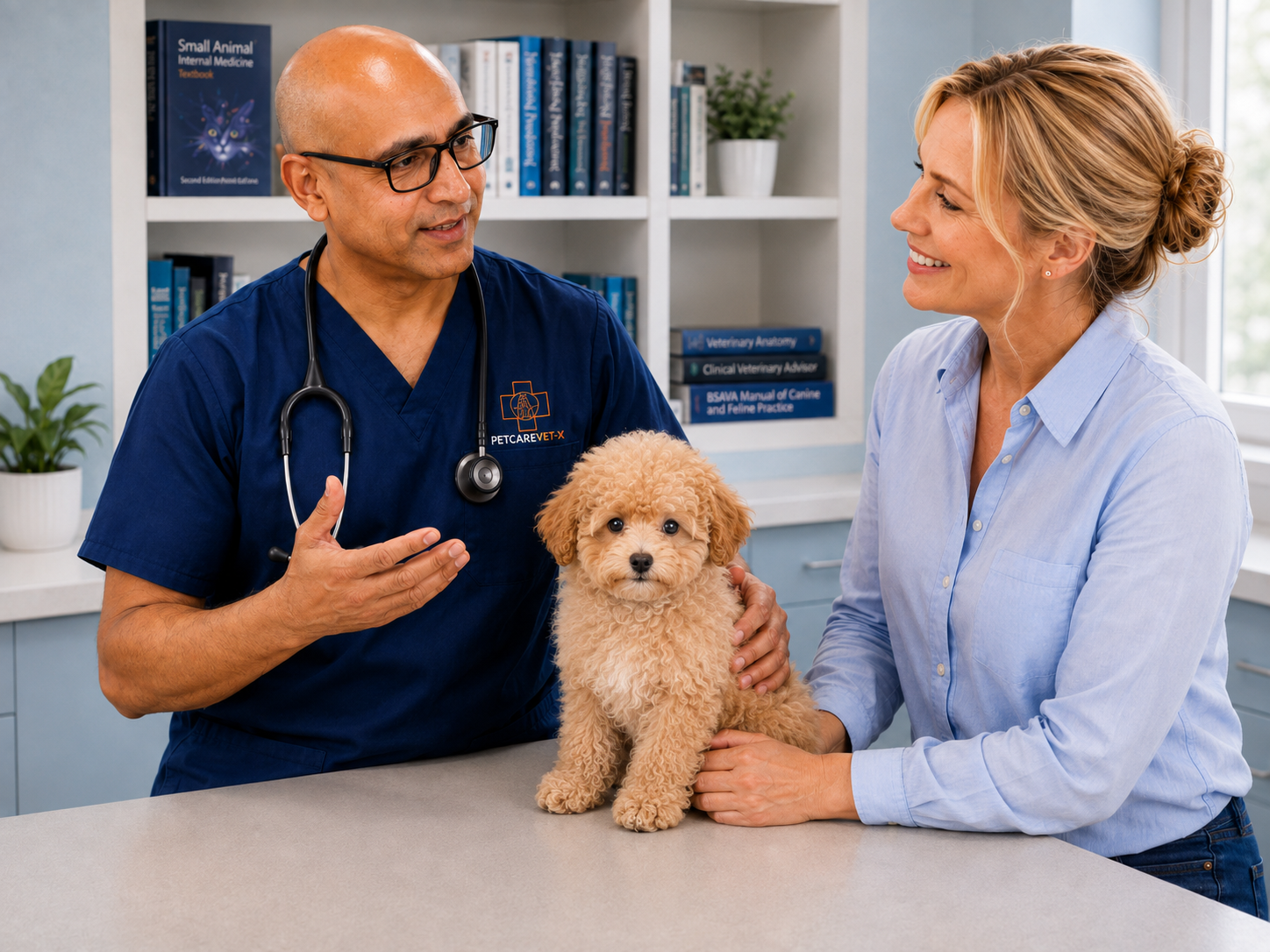
FROM SOUTH AFRICA TO VETERINARY MEDICINE
Born on a farm in South Africa, animals were part of everyday life from the beginning. That early connection shaped a determination to become a veterinarian.
Pursuing that ambition meant leaving South Africa, crossing continents and studying veterinary medicine in India before continuing the journey in Australia — following a path I believed in and continuing to build upon it.
BROADENING THE WAY I THINK
Qualifying as a veterinarian was the beginning, not the end, of my education. I continued to broaden that foundation through:
- BVSc & AH — Veterinary Science & Animal Husbandry
- BSc — Chemistry
- MVSc — Reproduction
- MBA — Business Administration
- BSc — Veterinary Biology
- BVMS — Veterinary Medicine & Surgery
- MComLaw — Commercial Law
Each discipline added a different dimension to the way I think — how I frame a problem, gather and weigh evidence, formulate a working proposition, test assumptions, consider competing explanations and refine a conclusion when new information demands it.
Together, they developed a broader framework for reasoning through complex clinical problems rather than approaching them from a single perspective.
THIS LEADS TO BETTER PATIENT CARE.
DEVELOPING CLINICAL JUDGEMENT
Clinical judgement developed progressively through different veterinary environments.
Early Australian experience at Fairfield Hospital, working with the breeding and management of rabbits, rats, mice and guinea pigs, broadened my exposure to different species and biological systems.
This was followed by companion-animal clinical practice at Lort Smith, experience across animal welfare and shelter environments, private veterinary practice, and later responsibility as National Veterinary Services Manager — Seeing Eye Dogs Australia.
At Lort Smith, high-volume companion-animal practice provided intensive clinical exposure, averaging around 42 consultations a day and, when rostered for surgery, around 12 surgical procedures a day. That volume of real-world cases progressively sharpened clinical judgement, pattern recognition, surgical confidence and decision-making.
Different patients, different environments and increasing levels of responsibility progressively converted knowledge into practical clinical judgement.
BREADTH OF VETERINARY EXPERIENCE
My clinical experience has developed across a broad range of veterinary disciplines:
SURGICAL EXPERIENCE
Orthopaedic Surgery
- Cranial cruciate ligament surgery
- Fracture repair and stabilisation
- Limb salvage surgery
- Hip surgery
- Joint and musculoskeletal surgery
- Limb amputation
Soft Tissue Surgery
- Tumour and mass removal
- Abscess surgery and drainage
- Wound repair and reconstruction
- Skin and subcutaneous surgery
- Eyelid and periocular surgery
- Anal sac surgery
- Hernia repair
Urinary & Reproductive Surgery
- Desexing — ovariohysterectomy and castration
- Pyometra surgery
- Caesarean section
- Cryptorchid / retained testicle surgery
- Urinary obstruction surgery
- Urinary bladder stone removal — cystotomy
- Bladder and urinary tract surgery
- Reproductive tract surgery
Intra-Abdominal Surgery
- Splenic surgery / splenectomy
- Gastrointestinal surgery
- Gastric and intestinal foreign-body removal
- Gastrointestinal obstruction surgery
- Gastrotomy
- Enterotomy
- Intestinal resection and anastomosis
- Exploratory abdominal surgery
- Abdominal mass surgery
Plastic & Reconstructive Surgery
- Complex wound closure and reconstruction
- Skin flap and advancement procedures
- Reconstruction following tumour and mass excision
- Eyelid and periocular reconstruction
- Repair of traumatic skin and soft-tissue defects
- Tension-relieving closure techniques
- Revision of compromised wounds and surgical defects
- Scar and defect revision
DIAGNOSTIC EXPERIENCE
Diagnostic Imaging
- Digital radiography / X-rays
- Ultrasonography
- Abdominal imaging
- Thoracic imaging
- Musculoskeletal imaging
- Dental radiography
- Imaging to investigate masses, organ changes, injury and disease
Clinical Pathology
- Haematology
- Blood biochemistry
- Urinalysis
- Faecal examination
- Investigation of infectious and inflammatory disease
- Laboratory interpretation alongside clinical findings
Microscopy & Cytology
- Fine-needle aspirates
- Mass and lump assessment
- Skin cytology
- Ear cytology
- Blood smear examination
- Urine sediment examination
- Microscopic assessment of cells, organisms and inflammatory processes
Cardiovascular Assessment
- Cardiac auscultation
- Heart murmur assessment
- 12-lead electrocardiography — ECG
- Heart rhythm assessment
- Integration of cardiovascular findings with the patient’s broader medical condition
Integrated Diagnostic Assessment
- Bringing together history, physical examination, pathology, imaging, microscopy and cardiovascular findings
- Selecting investigations according to the clinical problem
- Interpreting diagnostic results in the context of the whole patient rather than as isolated test results
MEDICAL EXPERIENCE
Internal Medicine — Organ Systems
- Gastrointestinal disease
- Liver and biliary disease
- Kidney and urinary disease
- Respiratory disease
- Cardiovascular disease
- Endocrine and metabolic disease
- Neurological disease
- Immune-mediated and inflammatory disease
- Haematological disorders
- Multisystem disease and complex medical presentations
Dermatology
- Skin disease
- Ear disease
- Allergic and inflammatory skin conditions
- Bacterial and fungal skin infections
- Parasite-associated skin disease
- Hair loss and coat disorders
- Recurrent skin and ear problems
- Investigation of underlying systemic causes of dermatological disease
Life-Stage Medicine
- Paediatric patients
- Juvenile patients
- Adult patients
- Senior patients
- Geriatric patients
- Health assessment and medical care adapted to changing needs across each life stage
Acute Medicine
- Sudden illness
- Vomiting and diarrhoea
- Respiratory distress
- Acute pain
- Collapse and weakness
- Fever
- Acute urinary problems
- Rapidly developing medical conditions requiring prompt assessment
Chronic Medicine
- Long-term medical conditions
- Chronic kidney disease
- Chronic gastrointestinal disease
- Endocrine disease
- Cardiac disease
- Chronic dermatological disease
- Arthritis and mobility-related conditions
- Ongoing monitoring, treatment adjustment and review
Integrated Medical Management
- Bringing history, examination, diagnostics and response to treatment together
- Managing patients with more than one concurrent medical condition
- Adjusting treatment as disease progresses or the patient’s needs change
- Considering the whole patient rather than managing each disease in isolation
ADDITIONAL CLINICAL EXPERIENCE
Dentistry & Oral Health
- Comprehensive oral and dental examination
- Dental scale and polish
- Dental radiography / dental X-rays
- Periodontal disease assessment and treatment
- Tooth extraction
- Surgical dental extractions
- Management of fractured, diseased and retained teeth
- Oral masses and other oral pathology
- Dental pain assessment and management
- Preventive dental care and ongoing oral-health review
Anaesthesia, Analgesia & Recovery
- Pre-anaesthetic clinical assessment
- Anaesthetic planning adapted to the individual patient
- General anaesthesia for surgical, dental and diagnostic procedures
- Cardiovascular and respiratory monitoring
- Anaesthetic management of senior and medically compromised patients
- Peri-operative pain management
- Post-operative analgesia
- Oxygen support where clinically required
- Structured recovery and post-operative monitoring
Reproductive Medicine
- Reproductive assessment and clinical evaluation
- Pregnancy diagnosis and monitoring
- Management of reproductive disorders
- Pyometra and uterine disease
- Caesarean section
- Reproductive tract surgery
- Male and female reproductive disease
- Neonatal and perinatal considerations
- Integration of postgraduate knowledge in veterinary reproduction with clinical practice
Preventive Medicine & Wellness
- Vaccination and preventive health programs
- Parasite prevention and control
- Nutrition and weight management
- Dental disease prevention
- Life-stage health assessment
- Screening for emerging disease
- Senior and geriatric health monitoring
- Identification and management of individual risk factors
- Preventive planning adapted to the patient’s age, health and circumstances
- Ongoing review aimed at maintaining health and identifying problems earlier
The value of that breadth lies in being able to bring different areas of veterinary medicine together when considering the individual patient.
WHAT THIS MEANS FOR THE PATIENT
For the patient, experience means looking beyond the obvious, recognising when something does not fit, connecting findings across different areas of veterinary medicine and choosing investigations with purpose before deciding on the next step.
It means weighing medical, diagnostic, surgical and referral pathways in the context of the whole patient — knowing when to investigate further, when to treat, when to monitor, when to reassess and when a change of direction is warranted.
The value is not more intervention. It is more informed clinical judgement — making each decision for the individual patient in front of me, rather than simply following a formula.
BRINGING IT TOGETHER — PETCAREVET
The clinic was originally established in Endeavour Hills in 1994 as Power Road Veterinary Clinic. In 2006, it became PETCAREVET, bringing together the veterinary knowledge, scientific reasoning, clinical experience, leadership and broader education developed over the preceding years.
Clients travel from far and wide to PETCAREVET, including from Dandenong North, Doveton, Lysterfield South, Eumemmerring, Dandenong, Narre Warren North, Hallam, Rowville, Noble Park, Noble Park North, Dandenong South, Narre Warren, Narre Warren South, Berwick, Harkaway, Springvale, Springvale South, Mulgrave, Knoxfield, Ferntree Gully, Belgrave South, Narre Warren East, Bangholme, Hampton Park, Lynbrook, Keysborough, Scoresby, Wantirna South, Wheelers Hill, Clayton South, Cranbourne North and Clyde.
PETCAREVET became the platform through which accumulated experience could be applied, refined and progressively developed into an independently shaped approach to patient care.
PETCAREVET → PETCAREVET-X
PETCAREVET-X represents the continuing evolution of the practice — bringing together accumulated clinical judgement, broader veterinary capability, contemporary technology, structured clinical pathways and continued learning.
It builds upon the foundation established by PETCAREVET while continually refining how knowledge, experience, diagnostics and clinical decision-making are integrated.
PETCAREVET-X is not a departure from PETCAREVET. It is its evolution.
IMPROVING PATIENT CARE
Everything in the journey — education, scientific reasoning, clinical experience, breadth of veterinary capability, continued learning and the evolution to PETCAREVET-X — converges on one purpose:
IMPROVING PATIENT CARE.