Each Current Health Focus explores one important patient-care issue—why it matters, the signs or risks owners should recognize, and when veterinary assessment may be appropriate.
The PETCAREVET-X Clinical Pathway
Every patient journey begins by listening carefully and progresses through examination, evaluation, investigation, treatment and review. This structured pathway supports considered clinical decisions while adapting care to the individual needs of each pet.
LISTENEXAMINEEVALUATEINVESTIGATETREATMENTREVIEW
LISTEN — What is happening?
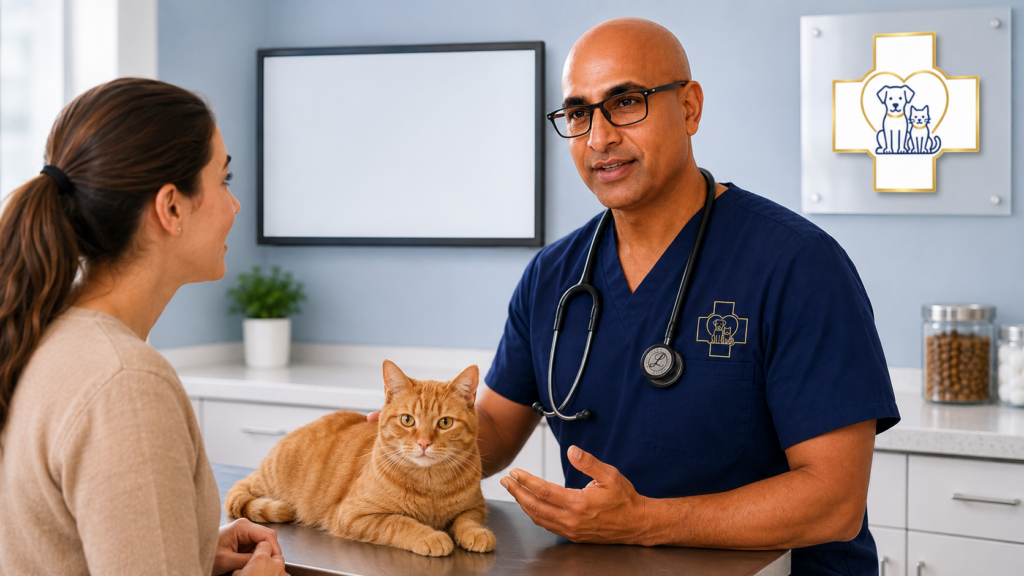
This is the information-acquisition stage. The client tells us what they have noticed:
the presenting concern, onset, duration, changes in appetite or behaviour, previous illness,
medications, environment and anything else relevant.
Listening means more than simply hearing someone speak. It involves
history-taking and understanding the client’s observations before forming conclusions.
Clinical output: a structured history and definition of the presenting problem.
EXAMINE — What can we find?
This is the clinical assessment stage. The patient is examined carefully for
physical findings that may help explain the presenting concern, with the
examination adapted to the individual patient and reason for presentation.
Examination brings the client’s observations together with
objective clinical findings obtained directly from the patient.
Clinical output: a structured set of examination findings that
helps define the patient’s clinical picture.
EVALUATE — What do the findings mean?
This is the clinical interpretation stage. The patient’s history and examination
findings are considered together to identify the important problems, assess their
significance and determine what should happen next.
Evaluation helps distinguish findings that can be managed directly from those
requiring further investigation, while keeping decisions
focused on the individual patient rather than testing indiscriminately.
Clinical output: a prioritised clinical assessment and a reasoned
plan for the next stage of care.
INVESTIGATE — What more do we need to know?
Investigation is used when additional information is needed to clarify the
patient’s condition. Depending on the clinical findings, this may involve
laboratory testing, diagnostic imaging, cytology or other appropriate procedures.
Investigations are selected according to the questions raised during clinical
assessment, so testing remains
targeted, relevant and appropriate to the individual patient.
Clinical output: diagnostic information that helps confirm,
exclude or refine the working clinical assessment.
TREATMENT — What should we do?
Treatment brings together the information gathered through the preceding stages
into an individual care plan. Depending on the patient, this may involve medication,
surgery, dentistry, nutritional management, preventive care, monitoring or another
appropriate intervention.
The objective is to
select care appropriate to the individual patient, their circumstances
and their clinical needs.
Clinical output: an individual treatment or management plan
designed to support the best achievable patient outcome.
REVIEW — Is the plan working?
Review reassesses the patient after treatment or management has begun.
Progress, response to care, new findings and any changes noticed by the client
are considered together.
Review closes the clinical loop by allowing care to be
continued, adjusted, escalated or reconsidered according to the patient’s actual response.
Clinical output: reassessment of progress and refinement of the
care plan where required.
Care That Extends Beyond the Consultation
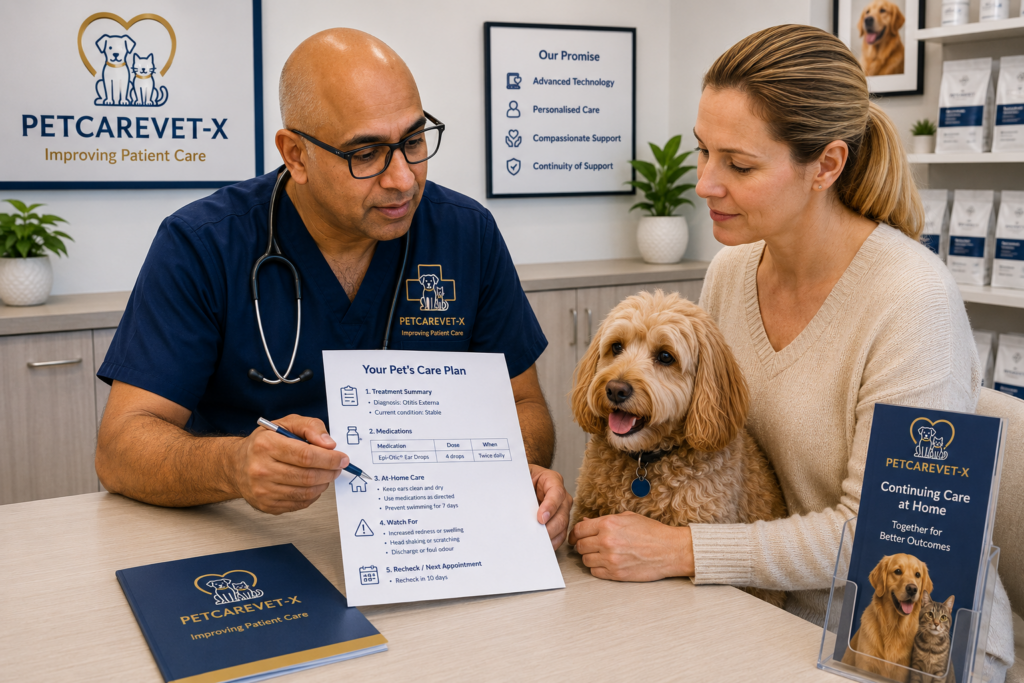
Care does not end when the consultation does. Clear guidance, practical treatment plans and continuing support help owners care for their pets confidently at home.
Technology & Clinical Judgement
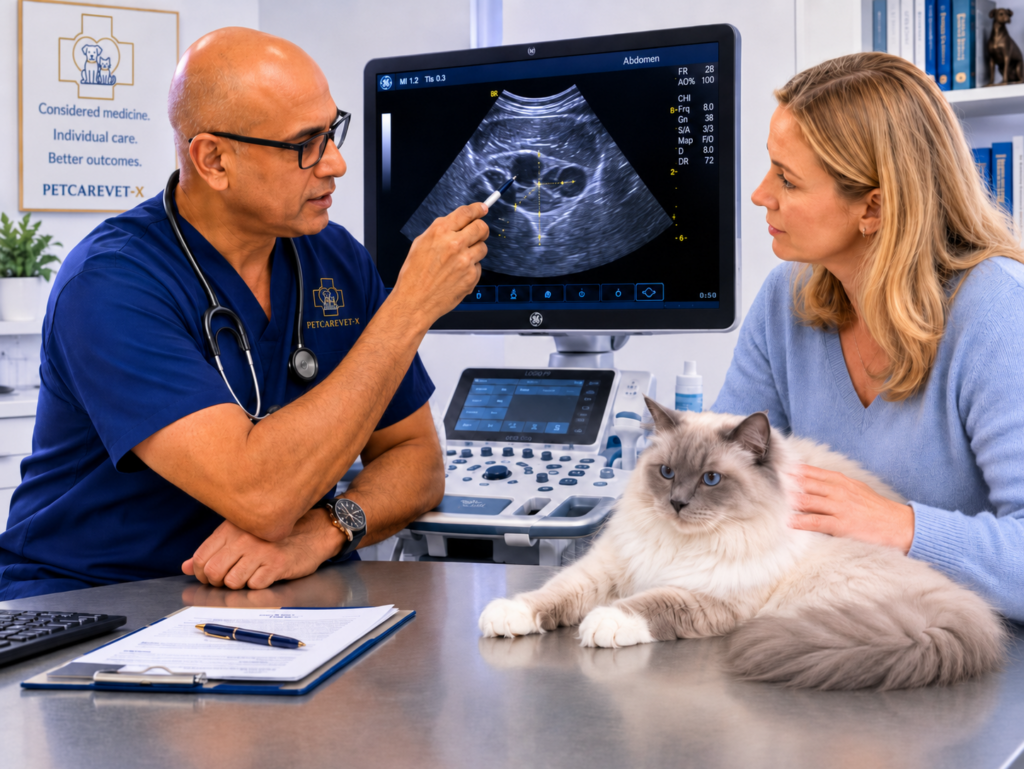
Advanced technology strengthens care when guided by clinical judgement. Diagnostic imaging and carefully interpreted findings help us make informed decisions for each patient.
Clear Communication Through Care
Clear communication is an essential part of good care. We explain findings, treatment plans, medications and home-care instructions clearly, so owners understand what their pet needs and feel confident about the next steps.
Ready to Discuss Your Pet’s Care?
Whether your pet needs preventive care, investigation of a health concern or continuing clinical support, our team is here to help.