

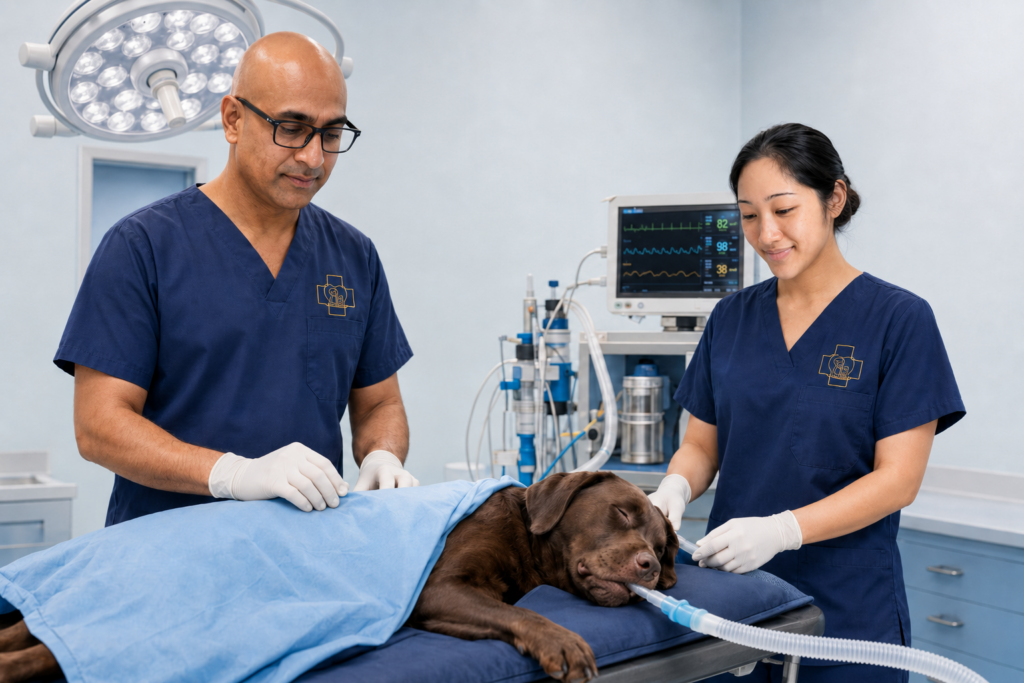
Surgery & Anaesthesia at PETCAREVET-X
Veterinary surgery involves far more than the procedure itself. Safe surgical care depends on appropriate case selection, pre-anaesthetic assessment, an anaesthetic plan tailored to the individual patient, careful monitoring, pain management and structured recovery. At PETCAREVET-X, these stages are considered together so that the patient’s health, the purpose of surgery and the expected recovery guide the plan.
Planning Surgery for the Individual Patient
Pre-Anaesthetic Assessment
Before anaesthesia, each patient is assessed according to their age, breed, medical history, current medications, examination findings and the procedure being planned. Pre-anaesthetic blood testing or other investigations may be recommended where they are expected to identify risks that could change the anaesthetic or surgical plan. The purpose is to understand the patient well enough to make informed decisions about safety, timing and preparation.
Anaesthetic Planning & Monitoring
The anaesthetic plan is tailored to the individual patient and the procedure being performed. Drug selection, airway protection, fluid support, temperature control and pain management are considered before anaesthesia begins. During the procedure, breathing, oxygenation, heart rate, blood pressure and body temperature are monitored so that changes can be recognised and the plan adjusted where necessary. Monitoring continues through recovery until the patient is stable and comfortable.
Pain Management & Surgical Recovery
Pain relief is planned before surgery and continued through recovery according to the procedure and the individual patient. Recovery care includes monitoring comfort, breathing, circulation and body temperature, together with wound protection, medication instructions, activity restrictions and clear guidance about signs that require veterinary review. Discharge is planned once the patient is sufficiently awake, stable and comfortable, with continuing pain relief and follow-up arranged where required.
Surgical Procedures at PETCAREVET-X
Surgical procedures may range from desexing and minor soft-tissue surgery to mass removal, wound repair, abdominal surgery and selected orthopaedic procedures. Before surgery is recommended, the diagnosis, expected benefit, anaesthetic risk, likely recovery and suitability for treatment at PETCAREVET-X are considered. Where referral would better serve the patient, that option is discussed. The objective is not simply to perform a procedure, but to choose the course most likely to improve the patient’s comfort, function or health.
Ready to Discuss Your Pet’s Care?
Whether your pet needs preventive care, investigation of a health concern or continuing clinical support, our team is here to help.